
Latest Products





Contact Us
- 201 Building A, Huashenghui Block, Xixiang Street, Bao'an District, Shenzhen City, Guangdong, China
- annie@visions-plus.com
- +8613760160092
Why Choose Us
Technology Innovation
The company has a strong technical research and development team that continues to innovate in its areas of specialization, introducing products or solutions that are competitive in the market. Technological innovation is the key to sustained growth, and choosing such a company means enjoying access to cutting-edge technical services and product support.
Experienced in the Industry
As a technology company with a certain influence in Shenzhen and even nationwide, Wearnes Technology has already accumulated rich project implementation experience and successful cases in many industries. This experience helps the company to more accurately grasp customer needs and provide tailored solutions, thus improving project success and customer satisfaction.
Quality Service
Quality service is the key to win customers' trust. Wearnes Technology has won the recognition and praise of our customers with its efficient, professional and caring services. This good reputation not only reflects the comprehensive strength of the company, but also provides new customers with the confidence and security of choosing the company.
The Concept of Cooperation and Win-Win
Upholding the business philosophy of openness, cooperation and win-win, the company actively establishes close cooperative relationships with enterprises upstream and downstream of the industrial chain, scientific research institutions and universities. This kind of cooperation not only helps enterprises to broaden market channels and enhance brand influence, but also can jointly promote the progress and development of the industry.
What is Depth Of Field Target
Depth of field is the distance between the closest and farthest objects in a photo that appears acceptably sharp. Now your camera can only focus sharply at one point. But the transition from sharp to unsharp is gradual, and the term ‘acceptably sharp’ is a loose one! Without getting too technical, how you will be viewing the image, and at what size you will be looking at it are factors that contribute to how acceptably sharp an image is. It also depends on how good your vision is!
 High Precision Depth Of Field Test Tool
We also call a depth of field targets the depth of field gauge, depth of field ruler . depth of
Add to Inquiry

★APERTURE: The smaller the F stop number the shallower the DoF
★DISTANCE: The closer you are to your subject, the shallower the DoF
★FOCAL LENGTH: The longer the lens (telephoto) the shallower the DoF
● To increase Dof
Use a big F stop number like F 11, F 16 or F 22
Move further away from the subject you are focusing on
Shorten the focal length of your lens with a wide angle lens like 24mm, 28 mm, and 35mm
● To decrease DoF
Use a small f stop number like F 2, F 2.8, or F 4
Move closer to the subject you are focusing on
Use a longer focal length lens like 80mm, or telephoto lens
Depth of field is all about drawing focus onto a particular subject and works in much the same way that the lens in your eye does.
Try closing one eye and placing your finger in front of the other. Now focus on your finger, and slowly move it away from your eye whilst staying focused on it. Do you notice how the background slowly comes into focus?
What’s happening here is your eye clamps a ‘focusing range’ around your finger so it can stay focused on it. As you move your finger away, your eye adjusts to move that focusing range with it, meaning the objects in the background are coming closer to the centre of focus.
The reason that the areas that are out of focus appear blurry is that the precision of the light being captured from these areas is sacrificed to benefit the precision of those you want to look at. This means that the light in these areas becomes scattered – usually in the shape of a circle because of the shape of your iris – the part of your eye that ‘steers’ light onto your retina

Use of Depth of Field Target
Depth of field refers to the part of a photograph that is sharp and appropriate. The amount of clarity and focus varies based on the settings you choose and the camera and lens you use. The depth of field indicates the proportion of the distance or depth that is “in focus”. Implementing this, a clear and detailed image can be seen. Three criteria are used to determine the depth of field: the size of the aperture, how distant the lens is from the object, and the lens’s focal length.
To use the depth of field, change the aperture setting on your camera to control the depth of field. A camera lens, like your eye, has an iris that can open and shut to allow in more or less light. The size of this slot, or aperture, is controlled by altering the aperture setting, which is measured in f-stops. For example, if you have a bigger aperture, your depth will be shallower. Conversely, your depth of field will go larger as the aperture gets lower. Thus more of your picture will be sharp.
Depth of field is mainly concerned with the lens’s aperture used for photography, while camera distance is also vital. The distance between your camera and the subject where your focus point is located has a significant effect. The lower the depth of field, the closer you are to your subject. As a result, the more distant from the subject, the greater the depth of field.
• Adjust Your Camera’s Aperture Settings by choosing an f-stop of f/2.8 results in a shallow depth of field, while choosing an f/11 results in a deep depth of field.
• Altering the Distance Between Camera and the Subject Using fast prime lenses generates beautiful bokeh or out-of-focus features in the backdrop.
Use Focal Length A 14-24 mm lens for a wide-angle lens.
A 35-70 mm lens camera that comes with many DSLR cameras.
Telephoto lenses have a high magnification and are available in focal lengths ranging from 70mm to 300mm.
A narrow depth of field will separate the subject from the background in portraits.
You can use a narrow depth of field to declutter an image’s background and focus on the foreground.
Portrait photography uses a shallow depth of field to draw focus on the subject.
A wide Depth of Field in landscape photographs will include everything in focus.
When shooting through a frame, you can use a wide depth of field to ensure that the subject and the frame are in focus.
Landscape photography utilizes a wide depth of field to capture even the most minute details in the landscape.
★The larger the aperture (smaller f-number), the shallower the depth of field
At f/1.8, only some of the green and red sticks are in focus. Everything else is blurred out. When we increase the depth of field by using a higher f-number, more of the scene is in-focus.
Consider: Depth of field when shooting moving subjects
When shooting moving subjects, consider using a larger depth of field so that the subject is more likely to stay in the in-focus area even as it moves around. The easiest way to do it without changing the composition is to narrow the aperture (use a larger f-number).
If you prefer to use a shallow depth of field, Canon’s reliable deep learning-based AF tracking should help keep the subject in focus.
★The nearer your lens to the subject, the shallower the depth of field
The lens was closer to the fence in the first image. This also makes the background closer (and look larger), magnifying the out of focus blur.
Tip: Also notice how when we step away from the subject, the framing and perspective changes although the focal length is the same.
★The longer the focal length, the shallower the depth of field
These two images were captured from the same shooting position by zooming in from 35mm to 105mm. The magnification from the longer focal length makes the depth of field look shallower. The opposite is true,
Too: Wide-angle lenses naturally provide a deeper depth of field even at wider apertures.
That’s why full-frame cameras create “more intense bokeh” and APS-C and compact cameras give more depth of field. Sensor size affects the focal length you use to achieve a given field of view.
★The depth of field is shallower than usual during close-up and telephoto shooting
If you are shooting close-ups or using a telephoto lens, you would have to use a narrower aperture than usual to get a deeper depth of field. If you are shooting stills of a static subject, you might even want to consider focus bracketing and depth compositing to achieve the desired depth of field.
• lose-up at f/1.8
Shot on the EOS R6 Mark II + RF35mm f/1.8 Macro IS STM
Only a thin strip of fabric is in focus in this close-up shot. That’s why focusing can be so challenging during close-up and macro photography!
• Telephoto @ f/11
Shot on the EOS R + RF600mm f/11 IS STM
We usually need a very wide aperture to get a blurred background but at 600mm, the focus is shallow even at f/11.
★Camera angle matters
Remember our “glass box” of focus? Unless you are using the tilt function on a tilt-shift lens, it is always parallel to the image sensor plane (and your lens’ tip). If you tilt your camera or shoot a subject from a different angle, you can change what is inside the “glass box” without changing the depth of field.
Here’s what happens to the gate from the previous examples when we shoot it from different angles.
Depth of Field Target and Depth of Focus Target
When considering resolution in optical microscopy, a majority of the emphasis is placed on point-to-point lateral resolution in the plane perpendicular to the optical axis. Another important aspect to resolution is the axial (or longitudinal) resolving power of an objective, which is measured parallel to the optical axis and is most often referred to as depth of field.
Axial resolution, like horizontal resolution, is determined only by the numerical aperture of the objective, with the eyepiece merely magnifying the details resolved and projected into the intermediate image plane. Just as in classical photography, depth of field is determined by the distance from the nearest object plane in focus to that of the farthest plane also simultaneously in focus. In microscopy depth of field is very short and usually measured in units of microns. The term depth of focus, which refers to image space, is often used interchangeably with depth of field, which refers to object space.
This interchange of nomenclature can lead to confusion, especially when the terms are both used specifically to denote depth of field in microscope objectives. The geometric image plane might be expected to represent an infinitely thin section of the specimen, but even in the absence of aberrations, each image point is spread into a diffraction figure that extends above and below this plane. The Airy disk, a basic unit of the diffraction pattern produced by the microscope objective, represents a section through the center of the intermediate image plane. This increases the effective in-focus depth of the Z-axis Airy disk intensity profile that passes through slightly different specimen planes.
Depth of focus varies with numerical aperture and magnification of the objective, and under some conditions, high numerical aperture systems (usually with higher magnification power) have deeper focus depths than do those systems of low numerical aperture, even though the depth of field is less. This is particularly important in photomicrography because the film emulsion or digital camera sensor must be exposed or illuminated in a plane that falls within the focus region. Small errors made to focus at high magnification are not as critical as those made with very low magnification objectives.
At high numerical apertures of the microscope, depth of field is determined primarily by wave optics, while at lower numerical apertures, the geometrical optical circle of confusion dominates the phenomenon. Using a variety of different criteria for determining when the image becomes unacceptably sharp, several authors have proposed different formulas to describe the depth of field in a microscope. The total depth of field is given by the sum of the wave and geometrical optical depths of fields as:
Where d(tot) represents the depth of field, λ is the wavelength of illuminating light, n is the refractive index of the medium (usually air (1.000) or immersion oil (1.515)) between the coverslip and the objective front lens element, and NA equals the objective numerical aperture. The variable e is the smallest distance that can be resolved by a detector that is placed in the image plane of the microscope objective, whose lateral magnification is M. Using this equation, depth of field (d(tot)) and wavelength (λ) must be expressed in similar units. For example, if d(tot) is to be calculated in micrometers, λ must also be formulated in micrometers (700 nanometer red light is entered into the equation as 0.7 micrometers). Notice that the diffraction-limited depth of field (the first term in the equation) shrinks inversely with the square of the numerical aperture, while the lateral limit of resolution is reduced in a manner that is inversely proportional to the first power of the numerical aperture. Thus, the axial resolution and thickness of optical sections that can be attained are affected by the system numerical aperture much more so than is the lateral resolution of the microscope.
The human eye can normally accommodate from infinity to about 25 centimeters, so that the depth of field can considerably greater than that given by the equation above when one observes the microscope image through the eyepieces. On the other hand, a video sensor or photographic emulsion lies in a thin fixed plane so that the depth of field and axial resolution using those sensors are given by the parameters in the equation. In these cases, the axial resolution is defined by convention as one-quarter of the distance between the first minima, above and below focus, along the axis of the three-dimensional diffraction image produced by the objective.
These values for the depth of field, and the distribution of intensities in the three-dimensional diffraction pattern, are calculated for incoherently illuminated (or emitting) point sources where the numerical aperture of the condenser is greater than or equal to that of the objective. In general, the depth of field increases, up to a factor of 2, as the coherence of illumination increases (as the condenser numerical aperture approaches zero). However, the three-dimensional point spread function (PSF) with partially coherent illumination can depart in complex ways from that so far discussed when the aperture function is not uniform. In a number of phase-based, contrast-generating modes of microscopy, the depth of field may turn out to be unexpectedly shallower than that predicted from the equation above and may yield extremely thin optical sections.
In digital and video microscopy, the shallow focal plane in the target of the camera tube or CCD, the high contrast achievable at high objective and condenser numerical apertures, and the high magnification of the image displayed on the monitor all contribute to reducing the depth of field. Thus, with video, we can obtain very sharp and thin optical sections, and can define the focal level of a thin specimen with very high precision.
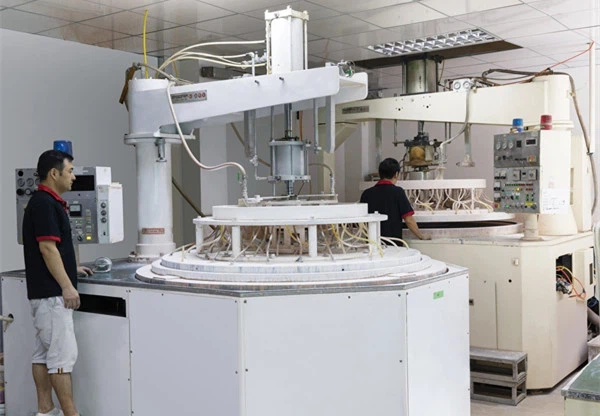
Since 2010, Visions Plus has been a company engaged in machine vision accessories service. With the rapid development of industry 4.0 and the machine vision industry, the requirements for visual accuracy in image detection applications are becoming higher and higher, as are the requirements for the adjustment of internal parameters of cameras and lenses, and the requirements for the high-precision calibration targets. Therefore, in order to better serve customers, at 2017 we have launched high-precision, high-quality, Camera calibration targets, with reasonable prices, and are specially customized for various computer vision applications, serving the positioning, measurement, detection image systems, and applications in machine vision cameras, industrial lenses, industrial automation, visual algorithms, precision research, precision equipment manufacturing, vision systems, Autopilot cars, visual display, precision image transmission and other photo industries.
We have both our own factories and trade services. Our calibration target products include: resolution calibration targets, distortion calibaration targets, Halcon calibration targets, OpenCV calibration targets, USAF1951 resolution targets, dot calibration targets, depth of field ruler, halcon12 calibration targets, checkerboard calibration targets, Ronchi rules, retires, etc.
There are hundreds of standard camera calibration targets/plates/charts, and thousands of custom camera calibration targets/plates/charts.




Certificate

Video
