
Latest Products




Contact Us
- 201 Building A, Huashenghui Block, Xixiang Street, Bao'an District, Shenzhen City, Guangdong, China
- annie@visions-plus.com
- +8613760160092
Why Choose Us
Technology Innovation
The company has a strong technical research and development team that continues to innovate in its areas of specialization, introducing products or solutions that are competitive in the market. Technological innovation is the key to sustained growth, and choosing such a company means enjoying access to cutting-edge technical services and product support.
Experienced in the Industry
As a technology company with a certain influence in Shenzhen and even nationwide, Wearnes Technology has already accumulated rich project implementation experience and successful cases in many industries. This experience helps the company to more accurately grasp customer needs and provide tailored solutions, thus improving project success and customer satisfaction.
Quality Service
Quality service is the key to win customers' trust. Wearnes Technology has won the recognition and praise of our customers with its efficient, professional and caring services. This good reputation not only reflects the comprehensive strength of the company, but also provides new customers with the confidence and security of choosing the company.
The Concept of Cooperation and Win-Win
Upholding the business philosophy of openness, cooperation and win-win, the company actively establishes close cooperative relationships with enterprises upstream and downstream of the industrial chain, scientific research institutions and universities. This kind of cooperation not only helps enterprises to broaden market channels and enhance brand influence, but also can jointly promote the progress and development of the industry.
What is Halcon Calibration Plate
The Halcon Calibration Plate, or Halcon, is a tool used in the camera calibration process to calibrate and measure the camera's internal parameters (e.g., focal length, optical center, etc.) and external parameters (e.g., the camera's position and attitude in the world coordinate system). These parameters are critical for subsequent image processing and machine vision tasks, as they ensure that the image data acquired by the camera accurately reflects the real-world scene.
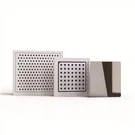
 Transparent Camera Calibration Targets
Industrial 4.0 requires high precision detection and measurements, the machine vision system need
Add to Inquiry Opaque Camera Calibration Targets
Accurate calibration of cameras is important for the success of all machine vision and computer
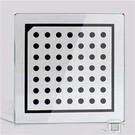
Add to Inquiry Halcon Calibration Plate On Glass
This Hacon Calibration targets on glass are with the Halcon featured pattern,laser write on glass
Add to Inquiry Halcon Calibration Plate On Ceramic
Our high precision Halcon calibration targets on ceramic are mainly for machine vision and image
Add to Inquiry Halcon Calibration Plate On Film
High precision film calibration target is also called film calibration chart,film is transparent
Add to Inquiry Halcon Calibration Plate On Aluminum
If you want a calibration targets durable,fall resistance,very low reflective,opaque.You can choose
Add to Inquiry Chrome Camera Calibration Targets
Halcon calibration targets is a high precision test charts for optical lens calibration
Add to Inquiry Black Coating Camera Calibration Targets
We make high accuracy Halcon machine vision calibration target,to adjust the industrial lens
Add to Inquiry Reflective Camera Calibration Targets
Since the development of industrial 4.0,requires for high accuracy detection and measurement,
Add to Inquiry Diffuse Camera Calibration Targets
To meet the increasing development of of industrial 4.0 and high precision detection and
Add to Inquiry Camera Calibration Targets Back Illumination
The Halcon targets provide an accurate means of calibrating measurement software for image
Add to Inquiry Camera Calibration Targets Front Illumination
To select the correct type, you must first consider which algorithm and algorithm to use. In
Add to Inquiry

Automation: The calibration board function can automatically detect and calibrate camera parameters without manual adjustment.
High accuracy: HALCON provides high-precision calibration function, which can accurately correct camera distortion and other parameters.
Good compatibility: Support for many types of calibration boards, including checkerboard grid, dot grid, etc.
Flexibility: It can be easily integrated with other HALCON algorithms to realize more complex applications.
Halcon calibration boards are calibration standards for optical measuring instruments, which are used to verify the accuracy and precision of optical measuring instruments in operation. In the use of optical measuring instruments, calibration is required before use because the sensor, angle, length and other factors may affect the measurement accuracy. Halcon calibration plates, as a standard tool, can be used to check the accuracy and repeatability of measuring instruments as their own shape, size, markings, and other attributes conform to standard specifications.

What Are the Common Types of Halcon Calibration Plates?
Categorized by pattern array
• Checkerboard Halcon Calibration Boards: These Halcon calibration boards use a checkerboard pattern consisting of black and white squares, similar to a chess board. Tessellated Halcon calibration boards are widely used in the field of machine vision and image processing due to their simple pattern and easy recognition and processing.
• Solid Circle Array Halcon Calibration Board: This type of Halcon Calibration Board consists of a series of equally spaced solid dots, the size and spacing of which can be customized. Solid Circle Array Halcon Calibration Plates provide high accuracy and stability in 3D reconstruction and vision measurement.
• Grid Halcon Calibration Plates: Grid Halcon Calibration Plates are similar to Tessellated Halcon Calibration Plates, but the grid lines may be thinner or coarser to accommodate different application scenarios. Grid Halcon Calibration Boards excel in applications that require higher precision or more detailed image processing.
• Ceramic Halcon Calibration Plates: While Ceramic Halcon Calibration Plates are categorized more by material, the pattern can also be a checkerboard grid, an array of solid circles, or a grid. Ceramic Halcon Calibration Plates have the advantages of high hardness, good abrasion resistance, and are not easily deformed, making them suitable for scenarios that require long-term use.
Categorized by material
• Glass-based Halcon Calibration Plates: Glass-based Halcon Calibration Plates are widely used in transmissive vision measurement systems and have the advantages of low coefficient of thermal expansion, high precision and good transparency. The glass material ensures that Halcon Calibration Plates maintain a high level of stability under temperature changes.
• Aluminum Oxide Substrate Halcon Calibration Plates: Aluminum Oxide Substrate Halcon Calibration Plates are primarily used in vision measurement systems with a front light source. Aluminum oxide material has a low coefficient of thermal expansion, good corrosion resistance, and can avoid the occurrence of reflective phenomena.

Before using Halcon calibration boards, you need to check whether the specifications and accuracy of Halcon calibration boards meet the usage requirements.
In the process of use, you need to ensure that the surface of the Halcon Calibration Board is clean to avoid the influence of surface contamination on the calibration results.
When calibrating optical measuring instruments, you need to fix the Halcon calibration plate on the workbench and use professional calibration software to calibrate the measuring instruments.
The frequency of using Halcon calibration board should depend on the actual measurement situation, and it is usually recommended to calibrate it regularly to ensure the accuracy and precision of the optical measurement instruments.
Recommendations for Selection of Halcon Calibration Plates
The accuracy of Halcon calibration boards is mainly determined by the processing technology, which is mainly of the following three types:
• Photolithography process (accuracy within 3um): High-precision photolithography machine, optical coating machine and other imported processing equipment, commonly used processing materials are glass and ceramics two kinds, the production pattern can reach lm, commonly used (glass) processing size is generally about 500mm;
• Screen printing process (precision 20-50um): High-precision screen printing machine, precision screen board and other processing equipment, commonly used processing materials are glass, ceramics, metal plates, composite panels, etc., the production range up to 2m, commonly used processing range 300-1000mm;
• Laser marking (precision 20-100um): Laser marking machine processing equipment, commonly used processing materials are aluminum alloy plate, the production range is generally within 400mm;
The accuracy of Halcon calibration plate is mainly determined by the processing equipment, but the final accuracy is also affected by the material and size of Halcon calibration plate.
Assuming that the resolution of the camera is 5 megapixels, the size of the Halcon calibration plate pattern is generally (1/2-3/4) times the field of view, but there are some differences in different vision software, the following is an introduction to the commonly used Halcon software and OpenCV software.
• HalconHalcon calibration board: There are two kinds of patterns, namely, dot array pattern (Array Halcon calibration board) and dot honeycomb pattern (Honeycomb Halcon calibration board), for Array Halcon calibration board, the recommended pattern size is (1/4-3/4) times the field of view; for Honeycomb Halcon calibration board, the recommended pattern size is (1/2-2) times the field of view. For Honeycomb Halcon Calibration Board, the recommended pattern size is (1/2-2) times the field of view. The pattern size of Honeycomb Halcon Calibration Board is allowed to be larger than the entire field of view, as long as any one of the five groups of characteristic marking points (one in the middle and one on each of the periphery) appears in the field of view, the Halcon Calibration Board will be correctly identified.
The substrate materials used to make Halcon calibration plates are mainly glass, ceramics, aluminum alloy, carbon fiber, film film and so on;
• Glass plate: Glass is mainly quartz and soda glass, the expansion coefficient of quartz glass is less than 10^-7, the expansion coefficient of soda glass is less than 10^-6, the flatness of both types of glass is um level, generally used to make um level Halcon calibration plates, but glass is fragile, the cost of the calibration pattern production (photolithography process) is expensive, especially when the quantity is small;
• Ceramic plate: Ceramic thermal stability is high, not easily disturbed by the external environment, flatness (5-50) um, generally used for um-level Halcon calibration plates, but the size of the production pattern (no large ceramic plate) is limited, the general pattern is less than 220mm, and the production cost is expensive;
• Carbon fiber plate: Carbon fiber plate has high stability, light weight and is not easy to be deformed, and is generally used for making large-size and low-precision (30um) Halcon calibration plates. However, there is a lattice pattern on the surface of the carbon fiber itself, and it is generally necessary to spray paint or film to cover the pattern first, and then make the required Halcon calibration plate pattern;
• Aluminum alloy plate: Susceptible to thermal expansion, poor stability, generally used to produce low precision (50um) Halcon calibration boards, screen printing process or direct laser marking to produce patterns.
• FILM FILM: A flexible transparent material, thickness 0.18mm, easy to deform, easy to expand by heat, unstable precision, general (10-100) um, depending on the size of the entire film, generally laminated on the surface of the glass used.
Halcon calibration boards are generally made of different materials for different light sources, but you can also select the light source you need based on the Halcon calibration board. According to the illumination method, it can be divided into two categories: Backlight light source and front light source;
• Backlight light source: Surface light source, parallel light source, telecentric light source, coaxial light source, etc. This kind of light source is usually on both sides of the target with the camera, and it is suitable for using Halcon calibration plates made of transparent materials with mirrored surfaces, such as glass Halcon calibration plates and FILM Halcon calibration plates;
• Front light sources: Ring light sources, point light sources, open surface light sources, dome light sources, coaxial light sources, etc. These light sources are usually on the same side of the target as the camera, and are suitable for Halcon calibration plates with frosted diffuse reflective surfaces, such as ceramic Halcon calibration plates, coated Halcon calibration plates, carbon fiber Halcon calibration plates, and aluminum alloy Halcon calibration plates.
Application Areas of Halcon Calibration Plates
Industrial automated production
• Quality inspection: In automated production lines, Halcon calibration plates can be used to calibrate camera lenses to ensure the accuracy and stability of image acquisition, thus improving the precision and efficiency of product quality inspection.
• Product Positioning and Measurement: Halcon calibration boards can be used to accurately determine the conversion relationship between physical dimensions and pixels, realizing precise positioning of product location and accurate measurement of dimensions.
Industrial inspection
• High-precision Measurement: In high-precision measurement applications such as PCB boards, hardware plating, microscopes, mounters, etc., Halcon calibration boards are able to provide high-precision calibration data to ensure the accuracy of the measurement results.
• Defect detection: In defect detection in electronics, semiconductor, pharmaceutical and other industries, Halcon calibration boards can be used to calibrate the image acquisition system to improve the sensitivity and accuracy of defect detection.
Intelligent transportation
• Traffic monitoring: In intelligent transportation systems, Halcon calibration boards can be used to calibrate the lens distortion of traffic monitoring cameras to improve the clarity and accuracy of monitoring images, thus assisting traffic management and accident investigation.
• Automated Driving: In self-driving cars, Halcon calibration boards are used to calibrate the image acquisition system of the on-board cameras to ensure that the automated driving system can accurately recognize road signs, pedestrians and other obstacles.
Security surveillance
• Surveillance Camera Calibration: In security surveillance systems, Halcon calibration boards can be used to correct lens distortion and image distortion of surveillance cameras, improving the clarity and reliability of surveillance images.
• Face Recognition and Behavioral Analysis: With Halcon calibration boards to ensure the accuracy of image acquisition, face recognition and behavioral analysis algorithms can more accurately identify and analyze target objects in surveillance images.
Medical image analysis
• Medical Image Calibration: In the field of medical image analysis, Halcon calibration boards can be used to correct lens aberrations and image distortions of medical image acquisition equipment, improve the clarity and accuracy of medical images, and assist doctors in the diagnosis and treatment of diseases.
Research and education
• Machine vision research: Halcon calibration board is one of the indispensable tools in machine vision and image processing research to verify the accuracy and reliability of algorithms and models.
• Experimental teaching in colleges and universities: In the experimental teaching of machine vision and image processing related majors in colleges and universities, Halcon calibration boards can be used for image acquisition and calibration in students' experiments and course design.
Camera calibration is a necessary process to accurately measure the target object, each lens has a different degree of aberration, through the camera calibration can correct the aberration of this lens. After the camera calibration you can get the coordinates of the target object in metric units in the world coordinate system, camera calibration is actually the process of determining the internal and external parameters of the camera.
Positioning accuracy up to 0.001mm.
Compatible with Halcon and ActiveVision Tools machine vision software development kits from MVtech, Germany. Outside with bezel and one beveled corner, 7x7 dot matrix.

Halcon Calibration Board Maintenance Considerations
Common Halcon calibration plates are made of: Glass, ceramic, carbon fiber, metal, composite materials, and so on. How to better maintain and clean the calibration plate in use to extend the life of the calibration plate. The high-precision calibration plates with glass and ceramic substrates are characterized by high flatness and small coefficient of thermal expansion, so they do not require too much maintenance. However, care should be taken to avoid bumping and falling during use and transportation. The patterned part of the surface of the calibration plate should be upward during use, and try to avoid scratches from hard or sharp objects. In case of falling dust, use the balloon used for cleaning industrial lenses to blow the dust off, and if there is dirt, use water to rinse and dry.
Many people don't know why calibration boards are necessary, is it necessary to use calibration boards? What problems can the calibration plate solve? In fact, the role of the calibration board is not to be underestimated.
First of all, the inconsistency of the imaging ratio of the X and Y axes of the industrial camera sensor chip will lead to image distortion, and then it is necessary to use the calibration plate.
Second, industrial camera tilt will cause perspective distortion, this time Halcon calibration plate can effectively eliminate distortion.
Third, the spherical aberration of the wide-angle lens will also cause imaging errors, which also requires Halcon calibration board.
Fourth, barrel, pincushion, radial and non-linear aberrations in FA lenses require calibration plates to reduce or eliminate such aberrations.
Halcon Calibration Plate Materials
The difference between the Halcon calibration plate made of ceramic material and the Halcon calibration plate made of optical glass material is estimated that there are many friends who are not very clear about it, first of all, the Halcon calibration plate made of ceramic material, the reflectivity can be reduced by 80%, it has the characteristics of excellent resistance to high temperature, abrasion and chemical corrosion, and it is small in density, so it is very good in terms of optical performance, no matter it is the whiteness, transmittance or glossy effect. Or gloss effect is very good, but in terms of price ceramic is far more expensive than the optical glass material, ceramic material Halcon calibration plate and optical glass material Halcon calibration plate in the same specification size, ceramic precision is not as good as the precision of the optical glass, but specification of the accuracy of the small difference is not too big, which ceramic Halcon calibration plate is lacking. This is not the case with ceramic Halcon calibration plates.
Halcon calibration plate made of optical glass is the most common one, this kind of Halcon calibration plate made of optical material is chemically stable and has the best precision, this material has no impurities and bubbles, it is the best material for making high-precision Halcon calibration plate, and the price is not too expensive, this kind of Halcon calibration plate has a refractive index of 1.6x10-negative-sixth power, its disadvantage is a little light transmittance, reflection, and the difference in precision is not too big. Its disadvantages are that it is a bit translucent, reflective and easy to break.
Matte Halcon calibration plates, matte is relative to polished, that is, non-glossy surface. It is easier to maintain. The matte surface is a bit hairy, like the surface of frosted glass. Reflected light is diffuse, no glare, not blinding, and gives a feeling of stability and elegance.
Metal Halcon calibration plate, the biggest advantage of this Halcon calibration plate is that it is drop resistant and durable, but its biggest disadvantage is that there is almost no precision in terms of accuracy, so generally want to buy high-precision friends will not choose metal Halcon calibration plate .
Aluminum oxide material,Aluminum oxide base calibration plates also have high coefficient of thermal expansion, good corrosion resistance and other characteristics. It is suitable for scenarios where accuracy and stability need to be maintained over a long period of time. Similar to ceramics, aluminum oxide calibration plates are also commonly used in vision measurement systems with a front light source.
Since 2010, Visions Plus has been a company engaged in machine vision accessories service. With the rapid development of industry 4.0 and the machine vision industry, the requirements for visual accuracy in image detection applications are becoming higher and higher, as are the requirements for the adjustment of internal parameters of cameras and lenses, and the requirements for the high-precision calibration targets. Therefore, in order to better serve customers, at 2017 we have launched high-precision, high-quality, Camera calibration targets, with reasonable prices, and are specially customized for various computer vision applications, serving the positioning, measurement, detection image systems, and applications in machine vision cameras, industrial lenses, industrial automation, visual algorithms, precision research, precision equipment manufacturing, vision systems, Autopilot cars, visual display, precision image transmission and other photo industries.
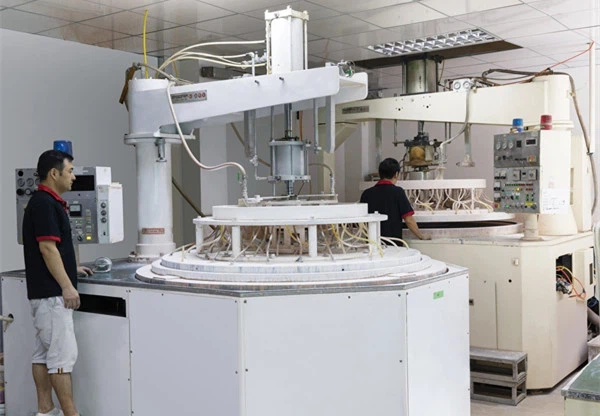
We have both our own factories and trade services. Our calibration target products include: resolution calibration targets, distortion calibaration targets, Halcon calibration targets, OpenCV calibration targets, USAF1951 resolution targets, dot calibration targets, depth of field ruler, halcon12 calibration targets, checkerboard calibration targets, Ronchi rules, retires, etc.
There are hundreds of standard camera calibration targets/plates/charts, and thousands of custom camera calibration targets/plates/charts.




Certificate

Video
